Iteration Speed
AI-assisted filmmaking changes the cost and speed of visual experimentation, allowing small creative teams to test cinematic ideas faster than traditional production systems.
The production barrier between independent creators and large studios is collapsing faster than most people emotionally want to admit.
A cinematic opinion piece from Alexander Kiesel and Periti Studios about AI-assisted filmmaking, independent production, visual experimentation, and the changing economics of cinematic scale.
Theme
AI Filmmaking
Perspective
Independent Cinema
Studio
Periti Studios
Cinematic Essay
A visual argument about speed, scale, and independent creative leverage.
Theme
AI Filmmaking
Perspective
Independent Cinema
Studio
Periti Studios
Author
Alexander Kiesel
Format
Cinematic Essay
Focus
Production Shift
Featured Video
A visual project connected with Alexander Kiesel, Periti Studios, and the new production reality created by AI-assisted filmmaking.
Core Ideas
AI-assisted filmmaking changes the cost and speed of visual experimentation, allowing small creative teams to test cinematic ideas faster than traditional production systems.
The strongest shift is not that AI replaces cinema. It gives independent creators access to visual scale that used to require large studios and expensive infrastructure.
Modern film identity can now be shaped through trailers, visual experiments, digital-first releases, and cinematic worldbuilding before a traditional production pipeline even begins.
Essay
A few years ago, cinematic sequences like this would have required entire production pipelines, large visual effects teams, expensive equipment, location coordination, actors, lighting crews, rendering infrastructure, and months of iteration.
Today, experimental creators, independent studios, and small production teams can prototype cinematic ideas at a speed that traditional film infrastructure was never designed for.
The funny thing is that most people are still debating AI filmmaking as if the only thing that matters is whether current outputs perfectly replicate traditional Hollywood productions.
That completely misses the actual shift happening underneath the industry.
The real disruption is not perfection. The disruption is iteration speed.
Traditional cinematic production was built around expensive experimentation. Every production decision historically carried enormous financial friction. Entire pipelines existed because visual production was difficult, slow, expensive, and gated behind massive infrastructure.
AI-assisted filmmaking changes the economics of experimentation itself.
Suddenly, small independent creative studios can iterate visual concepts, cinematic sequences, atmosphere, pacing, trailer structures, and storytelling ideas at a speed that would have sounded absurd only a few years ago.
At Periti Studios Cyprus, much of the experimentation has focused on hybrid cinematic workflows combining AI-assisted visual generation, cinematic storytelling, trailer editing, sound-driven atmosphere, visual worldbuilding, and independent digital production.
The most interesting part is not that these tools replace cinema. The interesting part is that they decentralize cinematic leverage.
A generation ago, cinematic scale belonged almost exclusively to large studios with enormous budgets, production infrastructure, and industry gatekeeping.
Now, a small team with creative direction, persistence, and enough experimentation can suddenly produce visuals capable of generating emotional reactions at massive scale online.
That psychological shift is what many people in the industry are reacting to emotionally.
Some people see AI filmmaking as creative democratization. Others see it as the collapse of traditional artistic barriers. Both reactions are understandable.
What feels undeniable, however, is that independent creators, experimental filmmakers, and digital-first production studios now possess creative capabilities that were previously locked behind traditional infrastructure.
The current generation of AI filmmaking tools is still early. That is the part many people do not fully process yet.
If these tools already generate this level of reaction while still considered early, the next generation of cinematic AI production systems will likely arrive much faster than traditional media industries expect.
Hollywood is not disappearing tomorrow. But the monopoly on cinematic scale already looks weaker than it did before.
Periti Studios Context
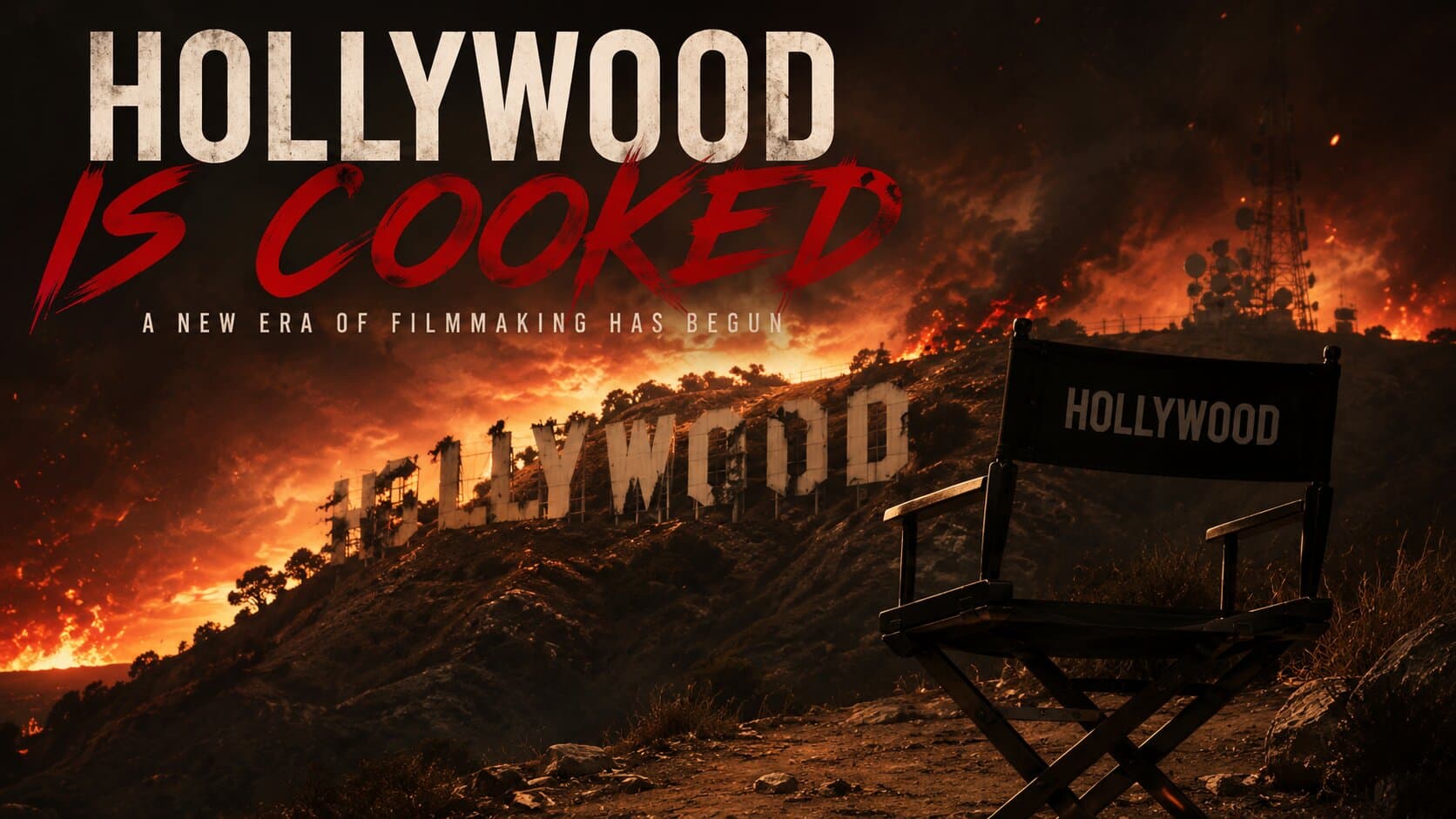
Hollywood Is Cooked works as both an opinion piece and a positioning page. It connects Alexander Kiesel and Periti Studios to the conversation around AI-assisted film production, independent cinematic experiments, and digital media workflows.
The page supports a stronger creative identity by showing a clear point of view, a featured video, structured article content, schema markup, and internal links to the wider Alexander Kiesel film portfolio.
Related Projects